


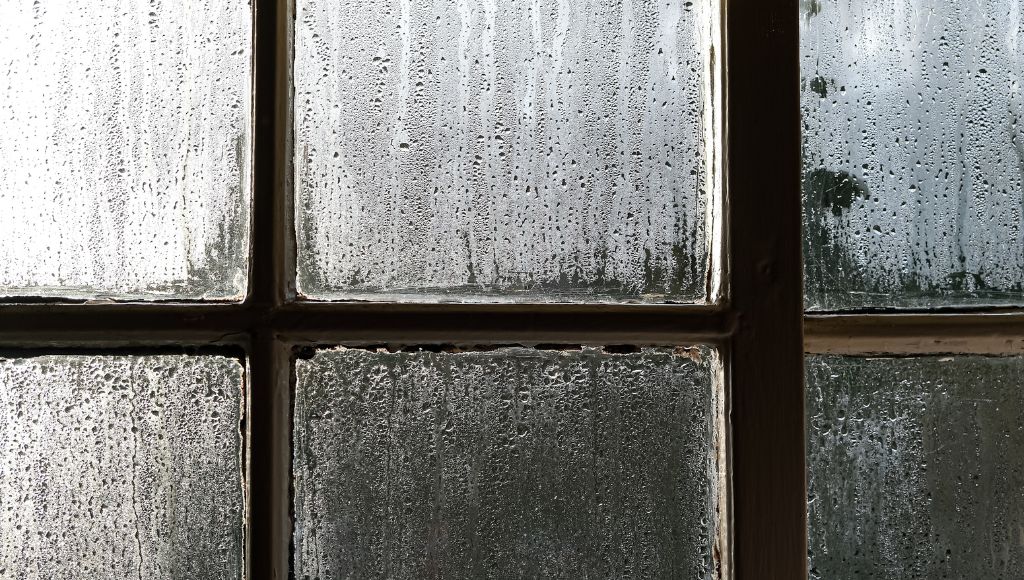
Condensation between double glazing panes means the seal in your window’s sealed unit has failed and moisture has got inside the gap between the two panes of glass. It’s not an emergency, but it does mean your window has lost its thermal performance. There’s no genuine DIY fix the sealed unit needs professional replacement.
What Does Condensation Between Double Glazing Panes Actually Mean?
Double glazed windows work by trapping air or gas between two panes of glass, sealed shut at the edges to keep everything airtight. That gap is designed to stay completely dry it’s what gives the window its insulating power.
If you see misting or fogging inside that gap, it means the seal has failed and moist air has leaked in. Once that happens, the unit can’t dry itself out again. The window still looks like a window, but it’s no longer doing its job properly.
Is Condensation Between Panes the Same as Condensation on My Windows?
No, and this distinction matters, because the fix is completely different depending on where the condensation actually is.
- On the outside of the glass (early morning, cold weather): This is a good sign. It means your window is insulating so well that the outer pane stays cold while your home stays warm.
- On the inside of the glass, facing the room: This is usually down to humidity in your home cooking, showering, drying washing meeting a cool glass surface. It’s fixable with better ventilation.
- Between the two panes of glass: This is the one that matters here. It means the seal has failed, and no amount of wiping or ventilation will clear it.
If you’re only ever seeing misting on the room-facing surface of your glass, that’s a household humidity issue, not a failed unit jump to the ventilation section below.
How Do I Know If My Seal Has Failed?
A few signs point clearly to seal failure rather than everyday household condensation:
- Fogging or misting that appears between the panes, not on either surface
- Misting that doesn’t clear when you wipe the glass, because it’s inside the sealed cavity
- Cloudiness that tends to show up most in direct sunlight, when the moisture inside evaporates and re-condenses
- The problem persists regardless of ventilation or heating changes in the room
If you’re wiping the glass and the mist is still there five minutes later, that’s your answer.
Why Do Double Glazing Seals Fail?
Seals don’t fail because of anything you’ve done wrong. It’s simply wear and tear over time, caused by:
- Age, most double glazed units last somewhere in the region of 15 to 25 years before seals begin to degrade
- Repeated expansion and contraction of the frame and glass through seasonal temperature changes
- General exposure to weather over many years
- Manufacturing quality better-made units with warm-edge spacers and quality seals tend to last toward the longer end of that range
If your windows are approaching that age range, seal failure is normal wear, not a sign of a faulty product.
Can I Fix Condensation Between the Panes Myself?
Not really, no. Some guides suggest drilling a small hole into the unit and inserting a desiccant to dry it out but this doesn’t restore the window’s insulating performance, and reputable glazing professionals treat it as a temporary, cosmetic fix at best rather than a genuine repair.
Once the seal has broken, the cavity between the panes is no longer airtight. The only way to properly restore performance is to replace the sealed glass unit itself.
The good news: replacing the glass unit doesn’t usually mean replacing the whole window. In most cases, the existing frame stays exactly where it is, and only the glass unit inside it is swapped out.
What Happens If I Leave It?
Failed double glazing isn’t dangerous and won’t suddenly get worse overnight. But leaving it does have real costs:
- Higher energy bills: a failed unit loses much of its insulating value, so your home works harder to stay warm
- Reduced comfort: cold spots and draughts near the affected window
- Permanent fogging or staining — over time, trapped moisture can etch or mark the inside of the glass, which won’t come out
- Lower kerb appeal: a visibly foggy window is one of the first things buyers notice if you come to sell
None of this is an emergency fix situation. But the longer it’s left, the more it costs you in wasted heat.
Where Does Condensation Show Up Most, and Why?
Condensation of any kind whether it’s inside your home or a sign of a failed seal tends to be more visible in certain rooms:
- Kitchens and bathrooms: cooking, kettles, and showers all release large amounts of water vapour into the air
- Bedrooms overnight: breathing alone adds moisture to a closed room
- Rooms with poor airflow anywhere extractor fans are missing or rarely used
If you’re seeing surface condensation (not between-pane fogging) mainly in these rooms, better ventilation running extractor fans, opening trickle vents, avoiding drying washing indoors near windows is usually the simplest, most cost-effective solution.
How Do I Stop Double Glazing Condensation Between Panes for Good?
Since a failed seal can’t be reversed, “stopping it for good” really means two things: fixing the current problem, and reducing the chance of it happening again sooner than it should.
To fix it:
- Get the affected glass unit assessed and replaced by a qualified installer
- Ask whether the frame can be reused, which keeps costs down compared to a full window replacement
To reduce future risk:
- Choose windows from a manufacturer using quality spacer bars and seals, not just the cheapest option
- Look for a guarantee that specifically covers seal failure, not just the frame
- Keep an eye on older double glazing as it approaches 15–20 years old, so you catch failure early rather than living with it for years
Does a New Installation Come With Cover for This?
At Secure Trade Frames, our windows are backed by a 10-year guarantee on our products and workmanship the kind of cover that gives you peace of mind if a seal ever does let you down. You can see the full details on our guarantees page, and check our accreditations for how our installations are certified.
If you’re dealing with misted windows right now, our team can assess whether it’s a straightforward glass unit swap or something more, as part of our free, no-obligation survey. Browse our full range of windows and doors if you’re weighing up a fuller upgrade instead.
So, What Should You Do About Condensation Between Your Panes?
- Condensation between the panes means the sealed unit has failed it’s not fixable with ventilation or wiping
- It’s different from surface condensation, which is usually a household humidity issue solved with better airflow
- There’s no reliable DIY fix; drilling and desiccant kits are a temporary cosmetic measure, not a genuine repair
- In most cases, only the glass unit needs replacing not the whole window
- Leaving it costs you in higher energy bills and reduced comfort, even though it’s not urgent
- A solid guarantee on new windows protects you if this happens again down the line
Your home deserves more than just four walls; it deserves windows and doors built to last, crafted to perform, and installed by people who genuinely care. Secure Trade Frames brings Leicester’s finest A-rated uPVC windows, composite doors, and conservatories straight from their own factory floor to your doorstep, with the craftsmanship and personal service to match. Don’t settle for draughts, noise, or soaring energy bills any longer. Take the first step toward a warmer, safer, smarter home. Call 0116 261 1155. Find them at 7A Earls Way, Churchill Industrial Estate, Thurmaston, Leicester, LE4 8DL.
